Think about an expensive Hermès handbag. It’s something that screams wealth and status, but in reality, it isn’t any more useful than a cheap bag from Target. A Rolex watch doesn’t tell the time better than any other, and Louboutin shoes do not make you taller than regular heels. But we are willing to splash out and splurge on these expensive items for the perceived social status they give us.
But what big-ticket items really scream success? What can you own that will show to one and all that you’ve well and truly arrived?
To find out more on this matter we surveyed 3,000 adults to gauge what they perceived as the ultimate status symbol where they live. Do we covet status symbols like cars and boats? Or are homes in unique locations the best indication of wealth? Here are some of the observations from our study:
Owning a private island in the Florida Keys emerged as Floridians’ ultimate status symbol. Their second choice would be to own a yacht in Miami or Palm Beach, followed by owning a property in a gated community mansion in Naples or Boca Raton.
Looking at other states, stately homes in high-end locations were a top status symbol across the board. States from Alabama to Wyoming picked enviable locations to have houses as a marker that one had truly made it.
From luxury lake houses on Wisconsin’s Lake Geneva to vacation homes on South Carolina’s Pawley’s Island, ski-in, ski-out properties in Colorado’s Aspen or Vail, and lavish mansions in New Jersey’s Alpine, where you choose to reside or host your holidays is a big marker of your status in life.
Other coveted items included the likes of luxury vehicles and boats. For instance, in Alaska, the top marker of status was ‘a heavily modified Ford F-350 or Toyota Tundra with tracks’. Nebraskans agreed, with many wishing that they could be among those who owned a classic car or truck Ford F-250 Super Duty with custom features. Arkansans, on the other hand, dream of owning a high-end fishing boat for the White River.
Some other states had more novel ideas on what they considered the highest symbols of success to be. These included Pennsylvanians having their own VIP box for Philadelphia Eagles or Pittsburgh Steelers games. Or, for Iowans, having access to exclusive political fundraisers was a great status symbol.
The Average American’s Approach To Splurging
But are Americans stretching beyond their means to afford these lavish items?
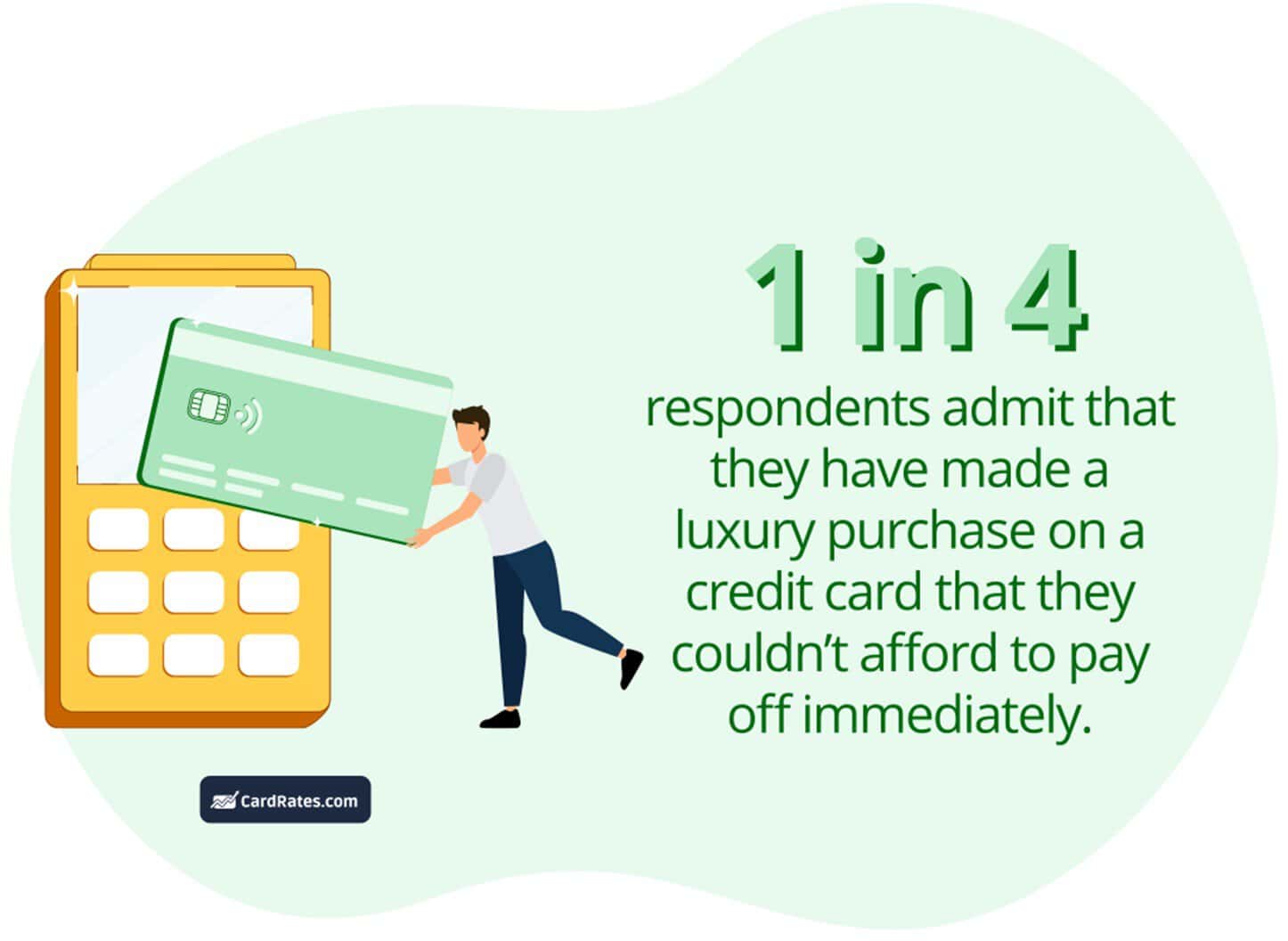
Almost half (49%) of Americans admit they have paid for luxury items on credit cards that they couldn’t afford to pay off in the short term. While 25% said they had done so not just once or twice, but multiple times. Only 13% said they would never use a credit card to make a luxury purchase, while 21% admitted to never really splurging out at all.
When it comes to buying high-end or luxury items normally, Americans are divided. 26% said they would usually save up and pay in cash or with a debit card, while the same number said they would use a credit card but pay off the balance quickly.
The rest either don’t buy luxury items (27%), pay off their credit card debts slowly over time (17%), or use buy now, pay later services (3%).
28% of respondents said the biggest fear holding them back from making luxury purchases using a credit card was being scared of going into debt, with a further 26% saying the high interest rates were enough to stop them from spending money on splurge purchases. That said, a large proportion of Americans (28%) said they never regretted any of their high-end purchases.
Using Credit Cards to Fund a Certain Lifestyle
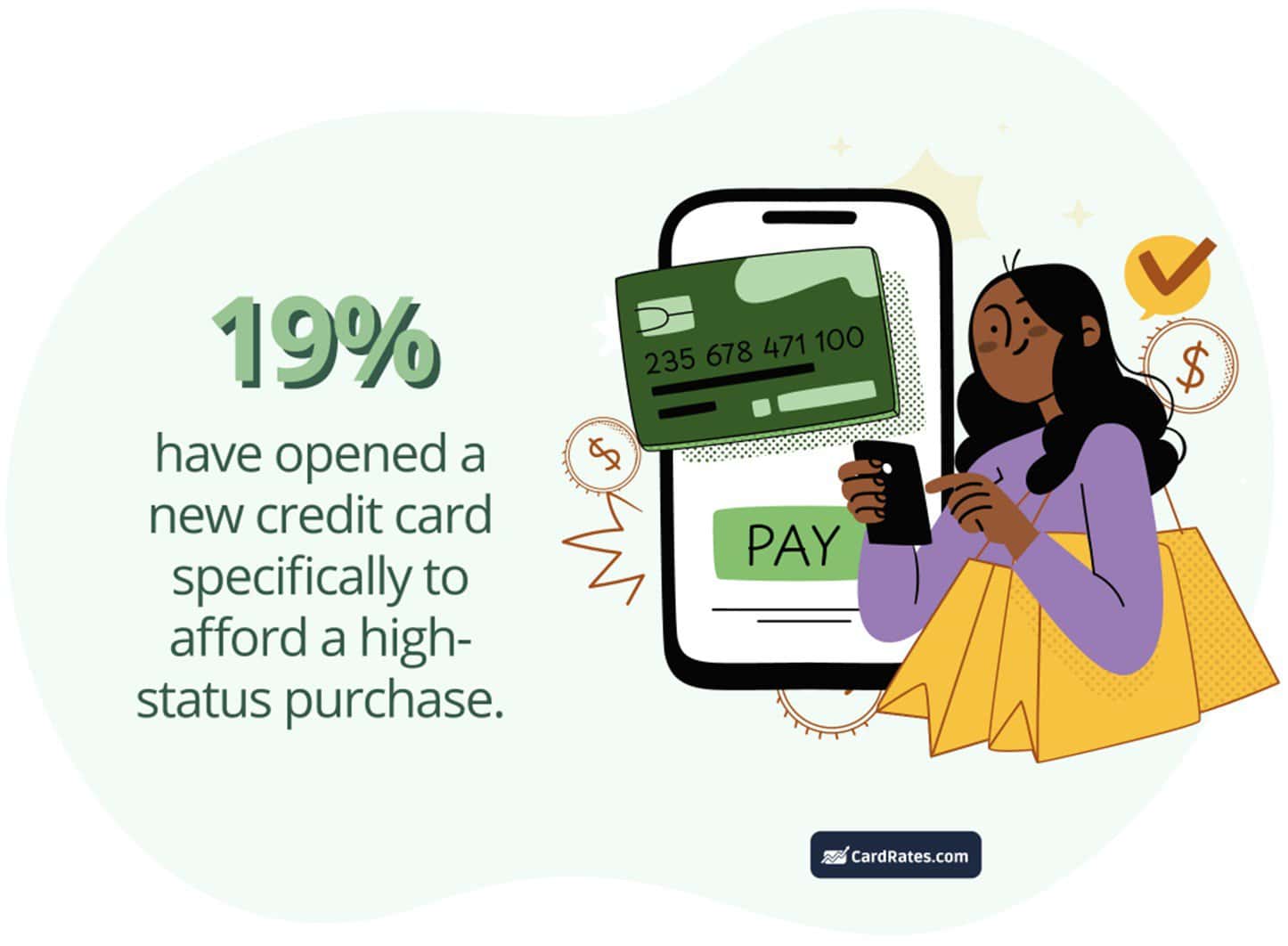
When asked if they had ever opened a new credit card specifically to afford a high-status purchase (e.g., luxury goods or exclusive experiences), this is what our survey respondents had to say:
- No, I would never do that: 38%
- No, but I’ve considered it: 25%
- Yes, and I’ve done it multiple times: 19%
- Yes, but I only did it once: 18%
Regarding choosing which credit card to use, 39% of respondents said that cash back or travel rewards were the biggest factor influencing their decision to apply for a new credit card. Next came a low-interest rate or 0% APR intro offer, with 30% of the votes, and a high credit limit for big purchases at 20%. The remaining 8% of respondents said they chose a credit card for its exclusive perks, such as airport lounges or concierge services.
But does merely the act of having a credit card enhance your social status? 41% of Americans believe not, that credit cards aren’t a status symbol, while 23% say that exclusive cards with high credit limits or VIP-only tiers, such as Amex Platinum or Black Cards are a symbol of success.
Our Biggest Splurge
So what would you decide to splurge on if money wasn’t an issue? When asked the following question — “If you received an unlimited credit card for one day, what would you be most likely to splurge on?” — the answers were somewhat surprising. The top pick by most of our survey respondents? 33% said they would choose to be responsible and not use it at all.
For those that would decide to splurge, the big-ticket item of choice for 27% of respondents, would be a high-end vacation or five-star hotel stay. Eighteen percent said a luxury car or extravagant experience, and the rest cited designer fashion, handbags, or jewelry.
If given the chioce to use an unlimited credit card on anything for a day, 33% of survey respondents said they wouldn’t make any purchase, while 27% chose high-end vacations and hotel stays as their response.
What about you? Would you use an unlimited credit card to treat yourself? Is this something you already do, or are you frugal and responsible, choosing instead to save up for the luxury items you really want? No matter which side of the coin you fall, if our survey results are anything to go by, it looks like you’re not alone.
Methodology
We selected 3,012 Americans from a geographically representative online panel of double-opt-in members. This selection was further tailored to meet the precise criteria required for each unique survey. Throughout the survey, we designed questions to carefully screen and authenticate respondents, guaranteeing the survey’s alignment with the ideal participants.
To ensure the integrity of our data collection, we employed an array of data quality methods. Alongside conventional measures such as digital fingerprinting, bot checks, geo-verification, and speeding detection, each response underwent a thorough review by a dedicated team member to ensure quality and contextual accuracy. Our commitment extended to open-ended responses, subjecting them to scrutiny for gibberish answers and plagiarism detection.
Editorial Note: Our site content is not provided or commissioned by any credit card issuer(s). Opinions expressed on CardRates.com are the author's alone, not those of any credit card issuer, and have not been reviewed, approved, or otherwise endorsed by credit card issuers. Every reasonable effort has been made to maintain accurate information; however, all credit card offer details, including information about rewards, signup bonuses, introductory offers, and other terms and conditions, is presented without warranty. Clicking on any offer on CardRates.com will direct you to the issuer's website, where you can review the current terms and conditions of the offer.
Jon McDonald brings more than 15 years of journalism expertise to CardRates.com. Informing financial consumers about emerging trends and companies making an impact in the industry, Jon is most knowledgeable in the areas of budgeting, credit card rewards, and responsible credit use; he strives to bring that experience to readers worldwide. Jon has a passion for writing and editing, and his articles have appeared in publications produced by The New York Times.